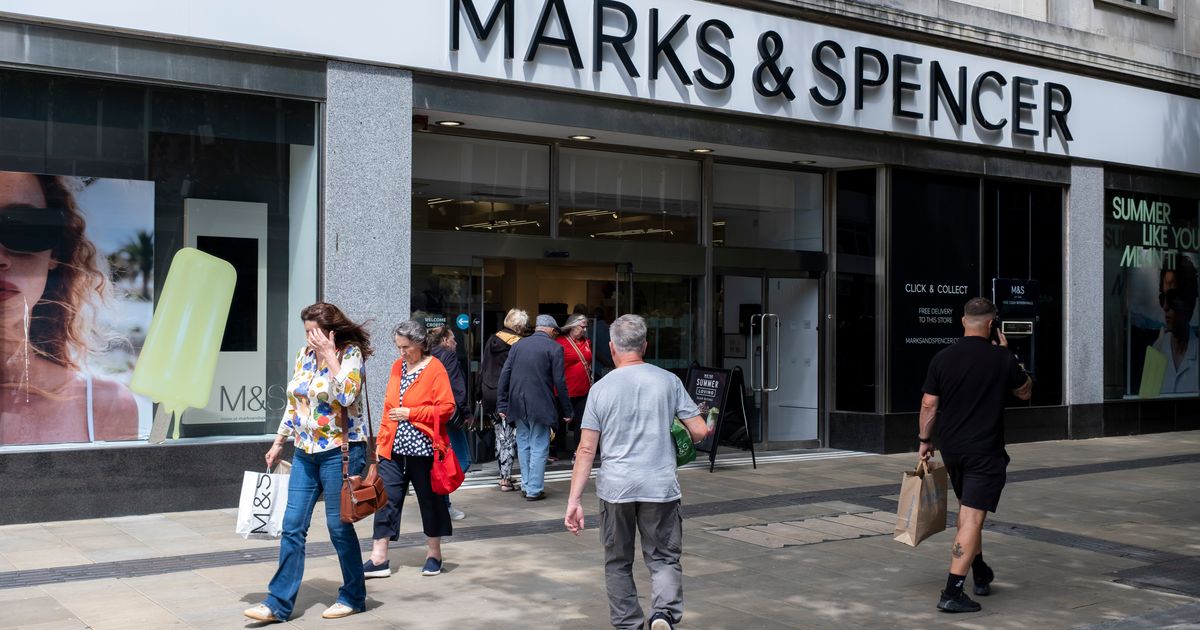
The End of an Era: M&S Swansea Oxford Street and the High Street's Evolution
The announcement that the iconic Marks & Spencer flagship store on Oxford Street in Swansea city centre will close its doors in late 2026 marks a significant moment for the South Wales retail landscape. After nearly seven decades of serving the community, this M&S Swansea Flagship Closure is more than just the end of a retail tenancy; it's a poignant symbol of the dramatic shifts occurring across high streets nationwide.
For shoppers, the Oxford Street branch has been a cornerstone, a familiar landmark defining the city centre's retail identity. For the 92 dedicated staff members, however, the news brings uncertainty and the prospect of a consultation period. This *m&s flagship store closing* event encapsulates the complex interplay of consumer behaviour, operational challenges, and strategic retail transformations that are reshaping our urban centres.
While the immediate focus is on the jobs affected and the future of a prime retail space, this development also prompts a deeper examination of Marks & Spencer's evolving business model and the broader challenges facing traditional high street retail in the digital age.
The Human Cost: 92 Jobs Affected and the Path Forward
At the heart of any store closure are the individuals whose livelihoods are directly impacted. Approximately 92 members of staff at the Swansea Oxford Street branch have been informed about the impending closure. This news initiates a formal consultation period, a crucial phase where the company will explore various options for its employees.
The consultation process is designed to mitigate immediate redundancies where possible. M&S has stated its commitment to exploring:
- Redeployment opportunities within the region: This could involve positions at other M&S stores or food-only formats in South Wales.
- Alternative roles within the broader business: Leveraging transferable skills for different functions within the M&S group.
- Redundancy support where necessary: Providing a comprehensive package for those for whom redeployment or alternative roles are not feasible, including career advice and outplacement services.
For affected staff, this period can be emotionally challenging. It's a time to engage actively with the consultation process, understand their rights, and explore all available support. The importance of transferable skills cannot be overstated in today's dynamic job market. Many retail skills, such as customer service, inventory management, teamwork, and problem-solving, are highly valued across various industries. Seeking advice from unions, career counsellors, and local job centres can be invaluable during this transition.
Navigating the Consultation Period
Employees are encouraged to:
- Attend all consultation meetings and ask clarifying questions.
- Understand their legal rights regarding redundancy and consultation.
- Update their CVs and begin exploring potential alternative roles, even outside M&S.
- Utilise any support services offered by M&S or external agencies.
While no immediate redundancies have been finalised, the prospect highlights the need for robust support systems for employees facing such significant career changes.
Beyond the Building: Why the M&S Flagship Store Is Closing
The decision to close the Swansea Oxford Street store is multi-faceted, stemming from a combination of long-term commercial trends and specific challenges related to the property itself. Marks & Spencer cited two primary factors:
- A sustained decline in sales over the past decade: This isn't a sudden dip but a prolonged trend indicating a fundamental shift in how consumers shop and what they expect from a physical retail space. Factors contributing to this decline likely include the rise of online shopping, increased competition from other retailers, and a general reduction in high street footfall.
- Significant operational challenges linked to the existing 69-year-old building: Older, multi-floor high street buildings often come with a host of issues that make them less suitable for modern retail. These can include:
- High energy and maintenance costs: Historic buildings can be expensive to heat, cool, and maintain, especially given current energy prices.
- Structural limitations: The layout might not be conducive to efficient stock management, modern merchandising displays, or easy customer flow. Refurbishment can be difficult and costly.
- Accessibility issues: Multi-story setups can pose challenges for customers with mobility issues, making single-level retail parks more appealing.
- Lack of modern amenities: Older buildings often lack the infrastructure for advanced digital integration, efficient logistics, or ample parking, which are now standard expectations.
M&S also noted that the property would require "substantial investment" to modernise and bring it in line with current retail standards. In an environment of declining sales, justifying such a significant capital outlay becomes increasingly difficult, aligning instead with a broader strategic re-evaluation.
It's crucial to understand that this closure is not linked to short-term financial distress for M&S as a whole. Instead, it is a deliberate move within the retailer's long-term transformation strategy, which seeks to optimise its store estate for future profitability and customer relevance.
The Cost of Legacy
The challenges faced by the M&S Swansea store are emblematic of a wider issue for heritage retailers occupying large, older premises on traditional high streets. While these buildings carry history and character, their operational inefficiencies and inability to adapt to modern consumer demands make them increasingly unsustainable without massive investment.
A Wider Retail Reimagining: M&S's Strategy and the High Street Shift
The closure of the Oxford Street store in Swansea must be viewed within the context of Marks & Spencer's comprehensive UK-wide estate review. Over recent years, the company has been executing a strategic overhaul, prioritising a different vision for its physical presence:
- Fewer but more modern full-line stores: The aim is to create larger, more efficient, and technologically advanced stores that offer a complete M&S experience in strategic locations.
- Expansion of food-led retail formats: M&S Food has consistently been a strong performer, and the company is investing heavily in standalone food stores and larger food halls.
- Investment in digital and online operations: A robust e-commerce platform and seamless omni-channel experience are vital for survival in today's retail landscape.
- Relocation from traditional high streets to retail parks: This is a key trend, driven by the convenience retail parks offer, including easier access, ample parking, and often lower operational costs compared to older high street properties.
This strategic pivot highlights the accelerating shift away from the traditional high street model. Many large, multi-floor high street stores have experienced reduced footfall, higher energy and maintenance costs, and structural limitations preventing necessary refurbishment. Retail parks, conversely, cater to the modern shopper's desire for convenience and often provide a more accessible, purpose-built environment for contemporary retail.
Anchor stores like M&S traditionally play a vital role in driving footfall to high streets. Their departure can create a ripple effect, potentially reducing visitor traffic for surrounding businesses and accelerating the decline of traditional shopping districts. This is why the search for a new, modern full-line store in Swansea is so crucial for M&S's continued presence in the city, as discussed in Swansea's Retail Future: M&S Explores New Site After 2026 Closure.
The Digital Imperative
The inexorable rise of e-commerce has fundamentally altered consumer expectations. Physical stores are no longer just transaction points; they must offer an experience that complements or enhances online shopping, making the demands on their design, technology, and location more stringent than ever.
Swansea's Retail Future: Adapting to Change
The departure of the *m&s flagship store closing* from Oxford Street presents both challenges and opportunities for Swansea city centre. The immediate challenge is the loss of a major draw and the subsequent impact on footfall for other businesses. However, it also opens up a significant space that could be reimagined as part of Swansea Council's ongoing regeneration efforts.
M&S has made it clear that its presence in Swansea is not ending. The company is actively working with Swansea Council to assess potential sites for a purpose-built, modern full-line store better suited to current retail demands. This indicates a strategic relocation rather than an outright exit, signalling M&S's continued commitment to the city, albeit in a different format.
For Swansea's high street, this situation underscores the need for diversification. Relying solely on large, traditional retail anchors is no longer sustainable. Future strategies for urban centres often involve:
- Experiential retail: Creating destinations that offer more than just shopping, such as leisure activities, dining, and entertainment.
- Mixed-use developments: Integrating residential, office, and commercial spaces to create vibrant, 24/7 communities.
- Support for independent businesses: Fostering unique local offerings that draw visitors.
- Community hubs: Utilising spaces for public services, arts, culture, and events to drive footfall and engagement.
- Improved public realm: Investing in green spaces, pedestrian-friendly zones, and public transport links.
The closure of an iconic store can be a catalyst for reinvention, prompting local authorities and stakeholders to accelerate plans for a more resilient and diverse city centre.
The closure of the M&S Oxford Street flagship in Swansea is a multifaceted event, reflecting personal impact for 92 employees, operational realities for an ageing building, and strategic shifts for a major retailer. It serves as a stark reminder of the ongoing evolution of the retail sector and the enduring challenges faced by traditional high streets. While the immediate future holds uncertainty for the specific site, M&S's commitment to finding a new, modern home in Swansea, alongside broader regeneration efforts, offers a glimpse into a retail landscape that is constantly adapting, innovating, and striving to meet the ever-changing demands of the modern consumer.